RCD – Why Type B RCDs Are Essential in Many Applications
Residual current devices (RCDs) have been a standard for personal and equipment protection for decades. However, with the increasing use of photovoltaic systems, EV charging infrastructure, and frequency-controlled drives, conventional devices such as Type A are reaching their limits.
All-current sensitive Type B RCDs also detect DC and mixed fault currents, ensuring safety in modern installations. These additional capabilities make Type B protective devices a practical solution for a wide range of applications. This page explains how they work, when they are required, and which standards must be observed.
What Is an RCD type B?
A Type B RCD significantly expands conventional residual current detection. It detects not only sinusoidal alternating currents and pulsating direct currents, but also smooth DC fault currents and high-frequency components. This is made possible by specialized sensors and electronics that prevent the device from becoming “blinded.” As a result, protection remains reliable even when DC components occur in the system.
How Does an All-Current Sensitive RCD Work?
Conventional Type A RCDs operate using a summation current transformer, which can lose its functionality when exposed to smooth DC fault currents greater than approximately 6 mA. In such cases, there is a risk that additional AC or residual currents may no longer be detected.
A Type B RCD monitors fault currents over a significantly wider frequency and current range. Thanks to additional measurement technologies, the device can reliably detect and safely disconnect:
- smooth DC fault currents,
- low- and high-frequency fault currents, as well as
- superimposed mixed currents.
This ensures effective protection even in complex installations with converters, chargers, or switched-mode power supplies.
Differences Between Type A and Type B RCDs
Type A RCD:
- Detects sinusoidal AC and pulsating DC fault currents
- May become ineffective with smooth DC fault currents > 6 mA
- Suitable for conventional AC loads without significant DC components
Type B RCD:
- Also detects smooth DC fault currents
- Identifies frequency-controlled fault currents, even in the kHz range
- Prevents “blinding” caused by DC fault currents
- Suitable for modern applications involving power electronics
Why Type B RCDs? Where Are Type B RCDs Mandatory?
The use of Type B RCDs is required wherever smooth DC fault currents may occur.
Typical examples include:
- EV charging infrastructure: Wallboxes and charging stations require DC fault current detection of 6 mA or more in accordance with standards.
- Photovoltaic systems: Transformerless inverters can introduce DC components into the grid.
- Industry & building automation: Frequency converters in elevators, pumps, or air conditioning systems generate mixed fault currents.
- Other applications: Uninterruptible power supplies (UPS), emergency power systems, chargers, switched-mode power supplies, as well as certain areas in medical and IT technology.
In these areas, the use of Type B RCDs is often not only recommended but required by standards such as DIN VDE 0100‑410, DIN VDE 0100‑530, and application-specific regulations (e.g., DIN VDE 0100‑722 for e-mobility).
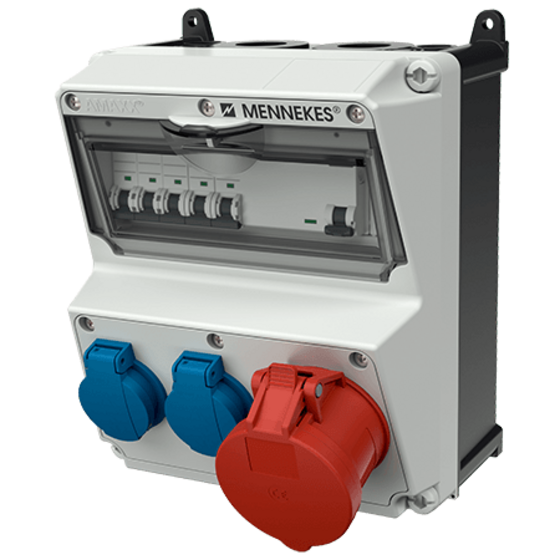
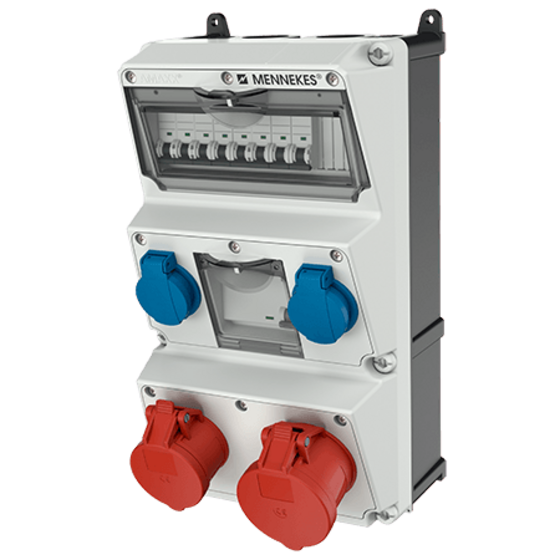
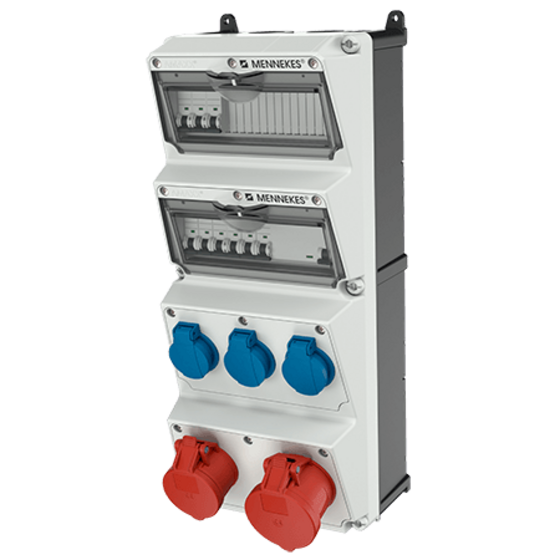
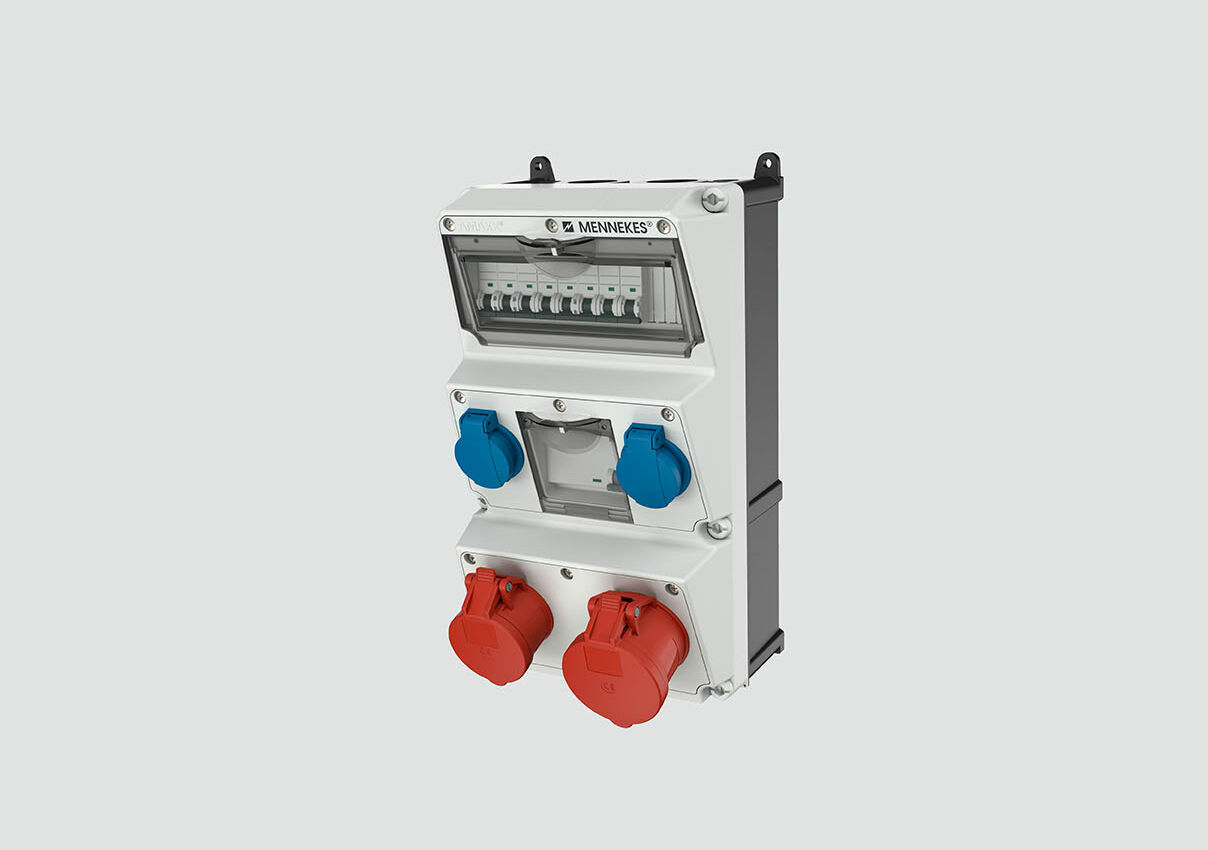
MENNEKES Wall mounted Combinations with Type B RCD
Our durable and robust wall mounted receptacle combinations with Type B RCD ensure safe operation wherever DC fault currents may occur. They are available in various sizes and configurations, featuring SCHUKO® and CEE receptacles.